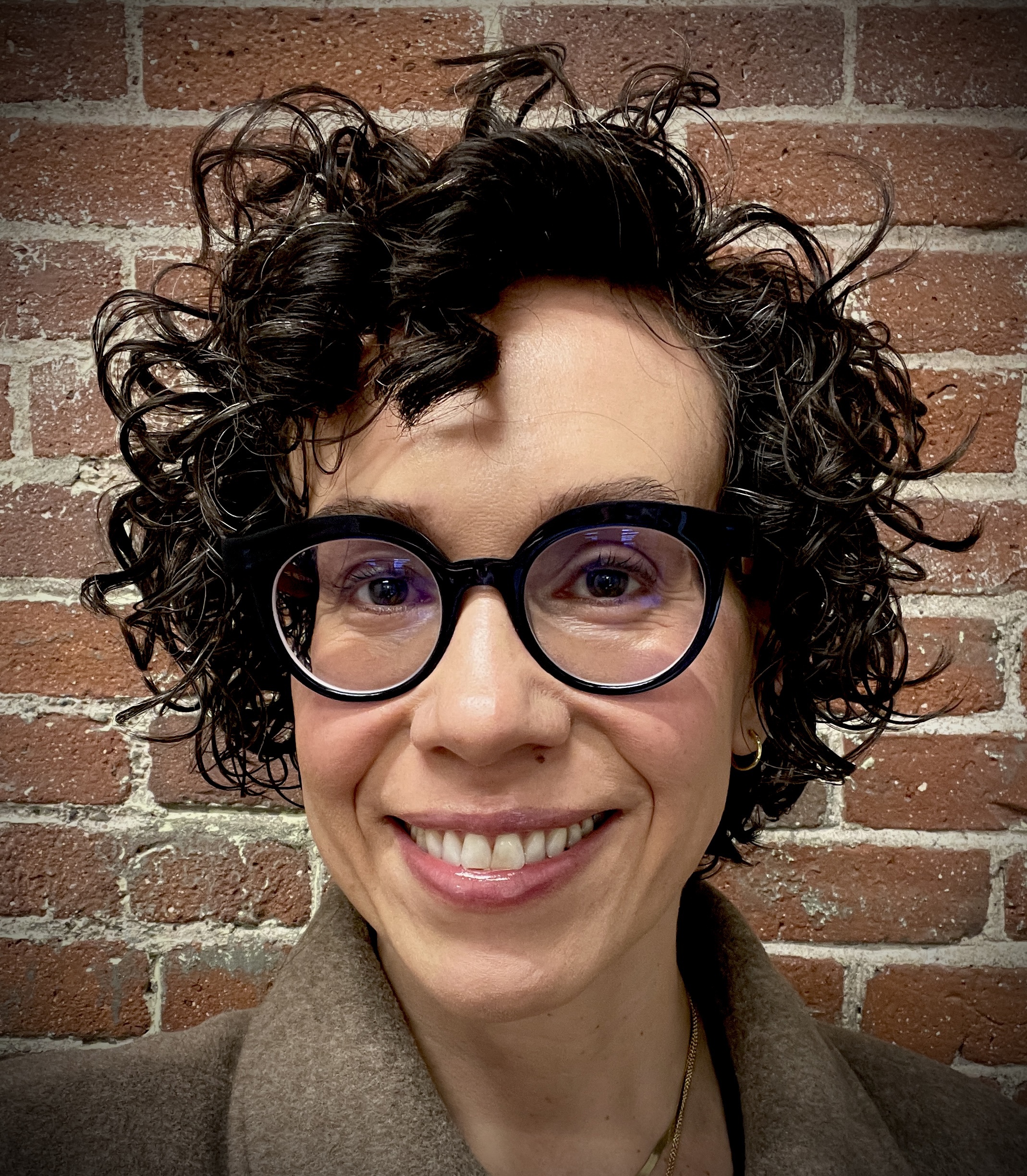
Hello, and thank you for joining. I am Melissa Travers, Director of Community here at BevNET and Nosh, and I am pleased to welcome you to the Nombase Podcast. Don't forget to check out nombase.com, BevNET's platform built for the CPG community.
It's where you can find episodes of this podcast and so much more. The Cannabis Space is one of the most fascinating frontiers in the beverage world. It's full of opportunity, but also full of challenges.
Regulations vary by state. There are the growing pains of any category, and many consumers still don't fully understand what these products are or how to use them. So how do you actually build a brand in that kind of environment?
That's what we're here today to discuss. Joining me today are two founders who are tackling that question from different angles.
Anna Baskin is the founder of Hytale, a newly launched low-dose cannabis beverage geared towards women who want a lighter, more intentional alternative to alcohol.
Angus Rittenburg is the co-founder and CEO of Wynk, one of the most established names in the space.
Wynk is now available in more than 20 markets and known for its consistent quality, low-dose approach, and innovative mobile production model that lets it scale compliantly across states. Thank you both so much for joining this discussion today.
It's a big topic and one that we've been tackling often. So thank you so much for joining the Nombase Podcast.
Thank you very much for having me and look forward to the conversation.
Thanks, Melissa. Excited to be here.
Likewise. Anna, let's start with you. So Hytale, it's a fresh entry into the category.
What did you want Hytale to stand for from day one?
I come in from a 20-year corporate background, and a lot of people would say, why would you just jump in to have THC Bev? It's not the most logical next step after working for Black Soap, right?
So really what it was is turning into your 40s, raising kids, just being so incredibly over-scheduled and so stressed.
And I was also just seeing so much in the news about how women are really struggling, and specifically moms, given that same generation. So many people looking to drink less and drink differently.
And I really didn't see anything that spoke to that need specifically. Like how do you address that badly needed reset moment, that kind of breath for her between the chaos of her day, and hopefully the joyful chaos of her evening.
So that's what Hytale is all about. It's only 1.5 milligrams of THC, and then we put 3 milligrams of CPG in it.
They say the G stands for giggle, so it should bring like an uplifting boost kind of feeling versus like kind of heavy feeling that we just don't have time for. We got to stay present and move on to the next.
We got soccer practice to pick up and dinner to make.
And we'll certainly get into this a little bit later in the conversation, but how are you shaping a brand identity that feels trustworthy and approachable to your target demographic, never mind the American population who's still trying to figure
this out. But how do you communicate that consistency and quality to the demographics that you're appealing to?
3:21
Quality Production Innovation
I love that question, Melissa, and that's at the heart of everything that we do.
So we're really consumer driven. And I agree with that insight. To bring this category into mainstream, it is all about building that trust, because I think a lot of people are waiting on the sidelines.
Either they don't know it exists, like you mentioned, or they're curious, but they're nervous.
So our data suggests that like 40% of women are super into this, but scared, because they had a bad brownie in college or something happened to them that makes them just reticent to reenter the category.
So Angus, I know you can speak to this a lot, given Wynk's prowess in production, but we wanted to start with quality from the get go. So that's about clean ingredients. It's about best in class emulsion.
It's about using the right can liners so you don't have leaching, because a lot of like lower quality products, the THC molecules will get stuck to the can, and so you're not actually drinking anything. You're having a soda water.
And then, you know, you need to use the right manufacturers that know what they're doing, because that leaching can occur in the mixer as well. And then testing, right? So that's just table stakes, right?
But that's what premium stands for. And then I think there's a lot about efficacy. So we also did studies.
We funded as a three-month-old brand, a longitudinal study to say, like, does this really work? We say we're relaxing for your reset, but are we, right?
But we were able to prove with a longitudinal study that, yes, you know, two weeks of daily hightail usage resulted in 53% reduced stress, anxiety and depression, and then better sleep. That matters to me, right?
So, like, trust, but verify, and that's what we're all about. Angus, I know you guys are vertically integrated and you can control every aspect of that with your brand.
Yeah. I mean, we started in 2020, and there were really three threads that sort of interested myself and my co-founders at that time.
On the topic of production, one of the big challenges in 2020 and 2021 was you had to produce the THC products in each state that you sold, which presented a really unique challenge for beverage.
It's very expensive to build beverage production facilities, and it's very time consuming to get state licenses.
So at that time, there were very few beverages in the US, and it's because there were no facilities to produce them in that were licensed under the state programs.
So our start, the first thread, to me that was interesting was a production solution that navigated this problem.
My background is engineering, so I designed a 53-foot tractor trailer with everything you need to do, everything you need to produce canned beverages, mobilely on it.
And rather than build facilities in each state, we partnered with license holders that already had processing facilities, but they didn't have canning. What we would do is bring our system to them.
We designed it in a way that was compliant under the state frameworks, that we could show up for two or three days, set up our canning system in their facility, produce a beverage, leave the inventory, move on to the next state, rinse and repeat, and
then come back before they ran out of stock. So that was the first thread that made me interested in this category. Myself and my co-founders were not cannabis consumers, we were alcohol consumers. And so the second thread was low dose THC beverage.
We saw the market growing in Canada, we tried a variety of products, THC beverages from Canada, high dose, medium dose, low dose. The medium and high dose scared us.
The experience is not good because we had no tolerance or experience, but low dose was really, really interesting and truly a good alternative for us, for beer or wine.
And that's what made me very interested in the product itself, and less focused on the production, but now the product was really compelling personally.
The third thread was the ability to produce a beverage for the alcohol occasion that had no calories, but had an undeniable effect.
With alcohol, you just can't deliver it without calories, but THC beverages for the first time, you could deliver something that fit that occasion, but didn't deliver calories.
So all those things came together, and that's really why we got into the business.
We came to the business with a low dose brand, or we came to the category of the low dose brand, a production solution and an interesting proposition with zero calorie. We've never sold a can of Wynk that we didn't produce ourselves.
Being vertically integrated has always been important for all the reasons that you said, quality, consistency, making sure that every time a consumer drinks the product, they have the same reliable experience that they enjoy.
And we've carried that through from the early days using the tractor trailer system through to today, where we have one of the biggest THC beverage co-packing businesses in the US. So we produce our products along with many of our competitors.
So Angus, Wynk is in more than 20 markets.
8:15
Consumer Education Engagement
You've been at this for quite a while now, and you've just explained a few of the solutions that have helped you maintain that brand consistency and quality. But how do you communicate that to your consumers?
You know, when we launched five years ago, we launched with a two and a half milligram drink. We carried that one dose through the first year. We found that as consumers got to know the dose that was right for them, they desired higher.
And so over time, we've added five milligram, we've added 10 milligram offerings.
But with any new consumer, we always recommend starting low and we'll keep that two and a half milligram drink forever because it's such a good entry point for the uneducated consumer.
It's a dose where regardless of your tolerance, you'll have a good experience and a very controllable experience. And then in terms of marketing strategy and communications, we do a lot of hyperlocal activations.
These can be very, very small parties that we participate in. We just did a Lambertville Film Festival kickoff party. So this is a small town in New Jersey.
It's a very local thing. It's something that's been going every year for a very long time. People trust that event.
It's very comfortable.
And so us being in there at an event that people trust, it's very local to the community, having good representation on the ground to answer questions and teach people about the category, give them an opportunity to try it, help them pick the right
starting product. We try and do as much of that as possible.
These are like small spends in tons and tons of places, as local as we can get, just to build trust and really get ourselves in front of a consumer in a place where they're comfortable and help guide them into the category.
I think exposure is such a huge opportunity for conversion.
So when we do tastings both on-premise at some of my local accounts here in the Chicago suburbs, and also I've done it at BevNET Live, Melissa, where I got to meet you, or we did it at the Zero Proof Festival recently in New York.
People come at me reticent and they're like, I'm nervous. I mean, Angus, I love your point on the two five milligram. My research suggests that that's even a little high for people.
Most of the women I talked to before I launched Hytale said they buy a five milligram gummy in half and that's their whole night. And they're like, I'd love to have two drinks though. So that's why Hytale's one and a half.
So you can enjoy some drinks during your evening without feeling out of control. But the transition you see when people, you know, I'm like, it's one ounce of a 12 ounce drink, that's 1.5 milligrams.
Like there's 0% risk that you're going to get over your skis on this one. And they'll taste it and they'll be like, it's just a drink.
Seeing a woman or any customer kind of come up, have a little sip, and then go back and order a full can is one of the most kind of rewarding parts of kind of going out and interacting with the customer.
And then from a marketing perspective, it's also such a great way to gather email addresses and get them into your CRM, which is our most profitable channel.
Anna, what are some of the questions that consumers have for you while you're sampling to them and getting them to try the product?
I do think it's kind of like a tale of two cities, right? Because there is this like $1 billion category that's mostly 10 milligram, that's existing cannabis users, right? And they know their stuff and they're asking you, is that Indica or Sativa?
And they're asking you all these questions. But then there's this long tale of people that have no idea. And their question, Melissa, will be, what is THC?
So we just have different universes really that don't touch. And so that's kind of fun for me where they're like, you would say, and we have CBG in it. So I'm talking about minor cannabinoids.
So explaining that, what is THC? What is CBG? Is this legal?
Can I drive? How many can I have? There's so many questions.
And if you reflect, Angus, you mentioned that you used to be a drinker. How did we learn? What happens if I have a couple straight whiskeys versus if I have two glasses of wine, right?
The effects are very different in different outcomes, but you learned it probably the hard way.
I think the interesting tool that we have with THC beverages that's underappreciated is the similarity in onset time to alcohol.
Yes.
As well as intensity of effect. So while the effect is not the same as alcohol, we get a lot of questions from consumers of like, what is two and a half milligram? How does that compare to alcohol?
And you can't really compare the effect itself, but you can definitely compare the intensity of the effect. So we often compare two and a half milligram to a light beer, in terms of how intense of an effect it will have on you.
But what's often comforting for new consumers is them knowing that, you know, unlike some of their, you know, bad gummy experiences where they ate a gummy and didn't feel anything until six hours later when they didn't want to feel it, with drinks,
it's very consistent. And typically the onset's, you know, 15 to 20 minutes and a peak around 30. And there's really interesting data coming out.
Johns Hopkins is doing a study to measure blood THC concentration over time for different product formats. And the preliminary data suggests that beverages are the fastest and they do follow a similar curve to alcohol, a similar onset curve.
That's a really good tool for consumers to kind of understand how this is going to affect them over time. And we're lucky with beverages that it is a good analog to alcohol. I think that's helpful for consumers.
So when you have that control factor where you know when you're going to be affected, I think onset for gummies is 90 to 240 minutes.
So that's a big delta that I am not comfortable with. And then I think the second exciting thing about good nanoemulsion is that it will leave you in an hour much like alcohol as well.
So you can metabolize this, which is not true if you smoke or if you have an edible. So you can have a drink, feel a little effect and then feel perfectly fine an hour later and go about your business.
I find myself in a sort of constant battle fighting the bad experience that consumers have had with high dose gummies in the past and trying to explain to them that the beverages are different and two and a half milligrams in a beverage is not going
to give them that bad experience. That seems to scare a lot of consumers away. Once they try it, they understand it is quite different.
I do think that's the risk in this category that we need to address though, from a regulatory perspective. Doing some store visits, I sometimes see 25 milligrams or even 50 milligrams on retail shelves at liquor stores.
I think that's a big risk, because there really is no equivalent of ingesting that much alcohol, your body would reject it. You just throw up.
You can accidentally take 50 milligrams or 100 milligrams, you're going to be high for two days if your body can't handle that and that's awful. And you can't get it out.
I think an opportunity we have as industry is to really work together to define what is low dose mean. Because there's people saying 10 milligrams is low dose and I just strongly disagree.
Even if I have a five in one sitting, it's too much for me, I can't finish it. But everybody is different. We have endocannabinoid systems in our body and they are receptive or not receptive to cannabis in different ways.
So it's really not like alcohol, when people are like, I'm a big guy, I can handle this. And that has nothing to do with anything. It's not having to do with your kind of food metabolism system as how affected you get.
So you really do need to try and like Angus said, start low and see how it treats you. You might feel quite something, you might feel not much, and that kind of depends on just naturally what your body handles.
Angus, you've been sampling Wynk to consumers for years now. And these are the years that consumers are being introduced to cannabis itself.
As we get further and further away from legalization, how are you finding consumer perception of cannabis changing and evolving as Wynk changes and evolves?
It's a very timely question, and I've noticed a dramatic change over the past even three months, being in the field and sampling. The awareness of this category has increased dramatically, and it's increasing extremely quickly.
The first three years of doing Wynk, consumers had no clue. They had no clue what Wynk was, they had no clue what THC beverages would do. If they weren't a cannabis consumer, they're terrified and no interest in trying.
Recent samplings, it's amazing. People are so open to the category. They've heard about it from friends.
Many know the brand now, which for me personally is amazing. And they're so open to trying. I was at a Giants tailgate a couple of weeks ago.
And the number of people that were willing to sample was amazing. We went through half a pallet of samples, and I could probably count on one hand, the number of people that were concerned about trying it.
This is dramatically different than it was even a year ago. So the category's got a lot of attention, a lot of interest. Consumers are hearing about it through all the marketing that all the brands are doing, as well as word of mouth with friends.
It's really truly amazing for me to see evolve.
Well, certainly part of word of mouth marketing includes social media. Social media is such a murky topic when it comes to cannabis because of regulations.
And, you know, Anna, when you launch a brand and when you launch a business, social media is oftentimes one of the first things you start to plan out.
How have you mapped out that strategy, especially with Metta, so Instagram and Facebook, with the restrictive rules that they have around cannabis marketing?
Great question. So obviously you have to be on Metta and it does drive eyeballs and build awareness for your brand. But there are a lot of unwritten red lines, right?
So getting into this space, I heard a lot of horror stories of people just getting deplatformed. So you build up a thousand, five thousand, ten thousand followers, you say something or they see a picture they don't like, and you're gone.
So everything shut off and you have to rebuild from scratch. So that put the fear of God into us as Hytale when we're trying to build.
Because you do want to speak honestly with your consumers and have those discussions about dosage that Angus and I were just talking about and quality and all those things. But there are certain words you can't say. So we're very cautious about that.
You can't say THC, for example, even though it's federally legal. In Illinois, it is also fully legal here from a state perspective. You just can't say it.
You can't push your promotions. There's so many little things that you just have to learn as you go and pray that you don't make a mistake.
And then you look at your competitor's stuff to make sure that you can say what you want to say that they've said it before. So for us, our strategy within that framework and paradigm is to build credibility and community.
So we really want to show that not only do we get who you are, we kind of are who you are. And this is like a community where we're trying to hook each other up and lift each other up and build a breath for women to take that reset moment.
So every opportunity we can to communicate quality, to communicate safety and just occasion, because I think still a lot of this is new for people. So I do hear a lot like, when do I drink this? I'm kind of nervous.
Can I have it? Before the kids go down, can I have it? And then drive in an hour and a half and all these kinds of questions.
But we are doing some bigger kind of programs and campaigns. And I know Angus, you had mentioned landing pages, so we're doing our first one.
I'm doing a high set, a high tail reset challenge in November to build community and get people all together to experiment with it. So like, what is it doing to your body if you try this for a week?
And will it replicate those studies that we did with more better? And like, will you also feel less stressed and less anxiety and better sleep?
So curious Angus with that in mind, if you have any kind of best practices for landing pages or how you've tackled that for Wynk in order to actually talk about your promotions and other campaigns that you're building.
Compliance challenges of all of the ad platforms are incredibly hard and landing pages are a good way to sort of get around some of them.
So, you know, connecting your ad to a page that's scrubbed of all of these sort of terms that are prohibited on the platforms is really helpful and then from the landing page, you can educate people generally and give them a pathway to the website
where it contains all of the information that we want to share. Lots of ways to do it. We have, you know, landing pages that are as simple as just an, it's just a page with an age gate. So it asks if you're 21.
If you click yes, it diverts you to the actual website.
That's something that sort of masks the website itself from the ad platform, but it solves this problem we all need to solve, which is making sure that traffic going to your site is over 21 years old.
And then, you know, the other things that we do are just create very educational pages that leave out some of the terms that would get banned but provide people, you know, enough information to get, you know, get interested enough to move forward to
the main site. We do a lot of sort of similar things, giveaways.
So ads where if you opt in and give us your email, you have a chance to win, you know, maybe it's a trip to the local waterpark with friends and you have a budget, just ways to get together, which is a key sort of premise for Wynk, being social,
getting together with friends. And that's a great way to get, you know, email leads.
And with those emails, you then have sort of a lifetime of marketing you can serve to them without all of these compliance issues that we run into on the ad platforms. So lots of different ways to navigate it, from very, very simple to more complex.
But it's ever evolving. You know, the policies are changing all the time. It's not always clear what you can and cannot say.
So having, you know, run digital marketing for the company for five years, we're still learning every day and still surprised every day by something new. It's very challenging.
Is there anything else you get dinged for on social media besides saying THC? What else can't you say?
You have to be very careful, you know, on your social accounts, you know, selling through your Instagram page, for example, to be very careful. Offers, you know, providing offers in your social posts can get you shut down.
There always seems to be a new trap that we're not aware of. But what we try and do with Wynk is give, you know, make our social page, you know, if you go to Instagram, drink Wynk or TikTok, just make it really engaging content, very genuine.
You know, we're not using AI to create content, it's real people doing real things. And then the brand itself, we wanted it to have a personality and a voice, be something, you know, genuine, engaging, funny.
And so when you look at our social media, if you comment, it's likely that Wynk itself will comment back to you. And it's just a, rather than being sort of a founder face for the brand, we wanted the brand itself to have a personality.
And I think we've developed something that people really connect with and engage with. And I think that's unique in this space. You do see a lot of brands that just exist.
It's not really clear what the brand stands for or the brand is the founder. What we wanted to do is create something that sort of stands on its own and people really enjoy interacting with.
The other thing that we do a lot of is influencer partnerships.
But what's different with Wynk and honestly really challenging is we're not doing huge influencer partnerships with people that have 10 million followers, doing a lot of very, very small influencer partnerships.
Oftentimes, we're just sending samples to somebody that might have a thousand followers, but it's clear that they have a really engaged audience that trusts them.
And so, we'll send, we do about 150 influencer packages a month, and most of these influencers are 5,000 followers or less.
Because we believe, you know, get exceeding the product with people that have a very loyal, trusted following is much more valuable than, you know, somebody that has a massive thought following or people that don't really connect with the individual.
And when we send these influencer samples, we're not, you know, paying them, we're not asking them to say a certain thing. We just, hey, do you want to try the product? If you like it, it'd be great if you post.
And we're not prompting. And what we often get is really good content, you know, really compelling feedback on the product. And that's what we love.
We just want people to tell the honest story and how they view the product and use the product. And I think that's voted really well for building trust in our product and brand.
We're doing the same thing with an affiliate program. We're not exactly at that scale, but we're ramping it up quickly. And same, we're not like doing campaigns in that you have to say what I tell you to say.
We're just saying, you know, I want you to genuinely open it and tell people what you feel when you first drink it and how you like it. And that is the most fun to watch. I mean, it's so fun for me when customers are like, look how cute the can is.
And they, you know, we have a little joke on all of our cans because Hytale has a personality as well, but it's not me. She may be loosely based on me. She's very cheeky and fun and it's her own thing.
So she will respond as well on socials. And it's just, it's fun to start to build that organic community, but it is hard and it is a crowded space.
And we do have just like so many people that are like only wanting to do paid posts and like real influencer campaigns, which I'm not sure how effective those are anymore. Because I think consumers are looking for more authenticity these days.
27:25
Product Positioning Packaging
Anna, you have a fairly defined demographic with Hytale.
Have you been surprised at any of the consumers who have responded to it outside of that demographic?
I do see a lot of dads that love it. I do get a lot of texts and messages on social that people's moms and dads are stealing into. I think seniors and dads are really into it.
I do want to be inclusive. I think anybody that loves a Hytale that's 21 up, I'm super happy about that. But I just think you need a reason for being.
I really want to help lift women up, and that's what I'm all about. But if other people, I love for Angus to enjoy a Hytale with me, he's welcome.
The dose is definitely right for me. I'm an extremely low dose consumer. Do you find it hard getting consumers to understand what CPG does?
I think they do not understand what it does, but I do think they understand that it feels different.
So I will say, if you have one, people will text me or call me, and I feel fantastic. Like this is a different vibe, you know?
And I scoured the earth, I tried all these terpenes, I tried like every minor cannabinoid, and I was just looking for something that gave me like a little boost. And that's what we're all about.
And we're going to do something in the non-cannabinoid realm here pretty soon too, that delivers that same kind of light hearted lift, because it's just about taking the edge off a little bit.
So I think there's a lot of us that could use something like that. Regardless of your demographic.
Yeah, we've talked a lot about adding different minor cannabinoids to future products. And the challenge for me is, you know, we've stuck to THC and CBD and Wynk from the start, and it's hard enough to explain what those two things do to consumers.
That's why I ask about CBD, because it seems challenging to get consumers to really understand what these other things do.
I think that's right, but I think they still don't understand what CBD is either.
Yeah.
We get that confused with THC, right? It's like an alphabet soup that is a challenge that we have, because you don't, you know, vodka is vodka. It's not like an acronym.
So that's something that I think people just will start to, I think. And to your point, like Wynk is THC, it's CBD, it's zero calories, it's refreshing, it's about community, right? That all makes sense.
Hightail, it's super low dose THC, it's always CBG, and it's about Lyft and that reset moment. So I think it's less about the components that create the effect and more about like, can your brand stand for that effect?
So I want you to know that if you have a hightail, you're going to feel a little boost, you're going to feel more chill, and you will be able to go about your day. And it doesn't really matter the why, in my opinion.
It's really cool for me now seeing these shelves filled with so many options for consumers. In the early days, we'd be in a dispensary, and we were the only beverage.
You'd walk in the store and you'd see all these products and then three cans of Wynk. Now you go into stores and there's a hundred options. You can have everything you want, high dose, low dose, CPG, CBD, THC.
It's really helpful building this category for consumers to have a variety to try. So I think it's great that there's folks like you with Hytale that have something different for consumers.
Thank you, Angus. And thanks for all you did to block and tackle for us. We wouldn't be here without you and the cans of the world.
I know brands like Wynk are very popular with my friends too, in the Suburban Mom demo. So how do we help them understand and bring them into the category without shouting the component part? It's not really about that.
It's like you could have a high noob, you could have a whispering angel, or you could have a high tale, or you could have a Wynk. It's all kind of the same vibe. Doesn't need to be in the special or druggy section.
31:27
Retail Strategy Future Growth
Anna, you just described the issue perfectly here.
How do you communicate all of that? And if you are at a local event or you're maybe sampling in a store, you can tell consumers that. But at the end of the day, you can't be there all of the time.
So how do you communicate all of that with your packaging? Have you found any solutions to be able to help consumers really quickly understand all of the questions you just laid out for us?
We try to be quite different in our packaging. So you'll see our four pack is black. It's got like an Art Deco wave on it, very minimal.
And it just says what it is. And then we also have some kind of jokes on there, right? So we do say literally on the package, this isn't like that brand you had in college.
And we do say like no alcohol, no regrets, that kind of thing. So trying to communicate what it is in the space and who it's for with the packaging is good. I do think placement is going to be really important for mainstreaming.
And I think having it in its own section is a little bit, probably not the long-term solution, right? It obviously makes sense to start there. But I don't know that a shopper is going to be like, oh, I just want to have a THC drink.
I think they're more just like, I want a drink. I want a delicious drink. And maybe that's non-alg.
Because everybody in their cart, they're putting like athletic beer in there, right? And then they might have, most people that are drinking non-alg are also drinking non-alg. And many of them are now also drinking THC.
So how do we help that consumer build their basket in a way that's organic to their shopping trip versus like having this like separate aisle, you know?
If you could choose anywhere in the store to be, where would you be?
Oh, Rosé. She's a Rosé all day girl. That's what Hightail all day instead of Rosé all day, right?
Because it's low dose, you can drink a bunch of it. It's pretty, it's delicious, makes you feel a little fancy. That's exactly where I come off.
If you could merchandise Hightail anywhere in the store, it would be sort of in that area, yeah.
Yeah, because it's a Chardonnay mom.
That's what she's used to doing and that's her habit, right? So if you can intercept her and say like, how am I going to feel if I drink this glass of Chardonnay versus how am I going to feel tonight and tomorrow if I drink this Hightail?
She might really prefer to drink the Hightail.
Angus, I would love to hear from you first, how do you use packaging to communicate value proposition, what the consumer is going to feel, what's in the can, all of that.
With our packaging, we really set out to look up here on the shelf similar to what people are used to seeing.
So when you look at Hainoon and White Claw, they're mainstream brands, they're in professional cartons, four pack, six pack, 12 pack, variety packs. It was important to us really early on to match that form factor and make it very familiar.
Wynk has attempted to create a brand and packaging that really has mainstream appeal.
So it's not leaning really heavily into cannabis, it's not leaning really heavily into older female, it's just broad, broad appeal, much like Hainoon and White Claw have done.
We do put the key RTBs front and center on the packaging, zero calories, zero sugar, no alcohol, on set time, no calories. So all those things are important. We also do a lot of like ancillary merchandising.
So we have shelf talkers. Our teams are really good at getting them up on the shelves and they give more information on the product. They're easy to adapt to any retailer.
It doesn't take up space in their store. It just clings right next to the price tag. We also offer in-store rebates on those shelf talkers.
So there's a QR code you can scan. When you scan it, it has more information on the product and a way to get a discount on your first purchase.
Those are really handy because you don't need a distributor and retailer buy-in because that rebate comes direct from us.
And it's a way to, again, get more people into our marketing funnel through email opt-ins so that we can give you more education over time.
Angus, can I ask a question on how that works effectively?
On the rebates, so they do your QR code, they check out normally, the retailer gets full ticket and then they upload their receipt to you and you give them, do you give them store credit on your digital store or how does the rebate work?
You actually send them cash?
Yeah. So they can be paid out through Venmo, PayPal. And when you scan the QR code, there's an opt-in and you can write email and phone number or phone number.
And it gives you, it'll send you a message with instructions, but ultimately, you just send a picture of your receipt back.
It automatically scans through, make sure it's a legitimate transaction and then lets you, you know, provide your Venmo or PayPal to get paid back.
Do any of your retailers push back on that and see that as like trying to steal their customer to draw into your DTC funnel?
No. No, it's nothing that I've ever heard in, nothing that I've ever heard in the market. Yeah, I was, I was actually in the New Jersey market the past two days doing store visits.
And the retailers that, that I brought these to were excited for us to put them up. So they do work really well.
The other thing I'd add is it's not an answer to your packaging question, but another interesting thing that I'm seeing now is, there's a huge amount of interest from the retail staff on the category and a lot of engagement and good questions to, to
our team on how they should be educating consumers in the aisle. So we try our best to get in front of the store managers and provide them education because they're, they're often having their team, you know, guide consumers that have questions and
they want to make sure they know how to point consumers to the right, to the right products. I think that store level education is going to become increasingly important and retailers are increasingly engaged and, you know, they want the, they want
Angus, you've described a pretty strong ground game between the local events, visiting retailers.
What kind of team do you have to put together to accomplish all of that?
We have a very, we actually have a very small team. We have about 21 people. But we have very, very good partnerships with our distributors.
You know, that's another just critical thing, is being a great partner to your distributor because they have the feet on the street. They're going to these accounts every day. They have the relationships.
One tool that we give our distributors, that's somewhat unique, is a lot of educational print materials that they can use.
So we have Wynk branded print materials with a lot of education, a lot of infographics, easy to digest information that can be distributed to the retail accounts. Those have been really helpful.
And we often get asked, you know, for them from retailers. So that's a way to sort of leverage the distributor. We also have a distributor resource portal.
So all of our distributors can log in to our site and they get access to any of the print materials that we have. So they can just pull the graphics and print them.
They have all our logos and it gives them ways to create their own things quickly that are on brand for us. And that's been really well utilized by our partners.
So you just mentioned New Jersey. We just partnered with Regal Wine Imports as our distributor in New Jersey. And we're just going in to new accounts there, which is really exciting.
And we were selective in choosing our first distro partner. And we were excited to go with the wine distributor because they're all about hand selling and telling the story and taste and quality, which is also what Hytale is trying to stand for.
So understanding that we're going new into retail. Angus, I'm curious any thoughts or any lessons you've learned in your years of retail on how to get velocity going and ensure that we're supporting our retail partners.
And not just selling that first point of distribution, but earning your reorders.
My general advice is don't go searching for the one big thing that you can do. The one huge marketing spend you can make to, it's a fool's errand to search for a big silver bullet. It's going to solve all your problems.
And unfortunately, it's just doing a lot of small things really well. It's a lot of small spends in a lot of different places consistently over time. And I'm never afraid to share any secrets because the reality is it's doing a lot of things well.
And that can be these hyper local events like I was talking about, like we just did in Lamberville. You just build these communities and get them going to the local stores and driving volume.
The in-store rebates help, like give yourself a little bit of an advantage in the store, make yourself stand out. It's a small offer, but something that consumers can utilize to help make their purchase decision.
Good relationships with the distributors just being there for them, having very consistent supply, being available for questions.
Because the easier you can make things for them, the more they're going to gravitate to you and really push you when they're in the store. Digital marketing is extremely powerful. You can distribute these rebates online to consumers as well.
We use our email list, which we have geographic data, so we can target key retailers to consumers we have in our email database that are local and drive them to store with a rebate, give them an easy way to make their first purchase.
There's so many different tools that you have, and I think the trick is being really intentional about doing a very high volume of small things that have an impact and not spend all your time looking for the one big national campaign.
Well, that sounds like an awful lot of work, but certainly the payoff is high, which is why so many folks are in the business, in addition to growing a brand and seeing those dreams realized.
Anna, it's been such a pleasure hearing from you and Hytale and learning about the brand. What's coming up next for you? What will 2026 bring for you and Hytale?
So, like I said, we're doing the reset challenge to close out the year, to try to get everybody ready and calm before the holidays.
We're launching an uninfused Hytale Halo, so I can drop that here as our official secret. First to market knowledge on that. And it's a buzz that behaves, so it'll have L-theanine and B12 instead of any cannabinoids.
So for the really kind of nervous, this is a way to try Hytale and get you into our flavor profile and checking it out. Or just a daytime option if you need a load off before the evening.
And then like I said, we're really going to try to blow out New Jersey and get that to be a super strong market for us. And then here in the Chicago Burbs, I'm going to use it as a living lab.
So I'm targeting 10 key accounts and I want to be there every week, doing tasting, testing the effectiveness of our shelf talkers, and getting some displays going and making sure that we're really showing velocity, and kind of perfecting that
customer message so that we have a playbook and can go into broader distribution here in Chicago and eventually more markets. Well, of course, also bolstering DTC.
And Angus, you have paved the way for so many folks in the cannabis industry. Do you have any last words of advice for folks out there building their brands?
We have an expression, you know, the right amount and the right account. That's really important. What I've seen other brands do wrong is just selling in these huge orders to uncertain accounts.
Like they don't have any selling history. And what often happens is it wasn't the right account and it was too much and they end up stuck with all this product.
And so a lot of the accounts that I went to in New Jersey the past couple of days are sitting on these huge stacks of random brands that didn't move.
And it's really frustrated the account because they're stuck with the product and it's really bad for the brands because once you do that, that store is not going to buy you again.
And so while it would be great to just get as much product in every store we can, our team is really focused on finding the right accounts that Wynk is really going to work in and giving them the right amount to start, get it moving and then
progressively increase order sizes. Can't understate how important that is. It's hard to not just try and get the fastest growth you can get with the biggest orders you can get anywhere you can get it, but it pays off in the long run.
The retailers trust you, they rebuy.
In the case of New Jersey, it's built a really good market for us, and retailers really do trust Wynk and our distributor, because they know we're not going to give them too much, and it builds good long-term relationships.
I think that's so smart. I think it's important to know thyself, and we're not but like, right. So I think having reasonable MOQs and building your right to be there, I think is really smart, and we intend to do the same.
What should we be on the lookout for in 2026 from Wynk?
2026 will really be a focus on expanding distribution.
Over the past five years, we've added a lot of SKUs. We have a really broad assortment across 2.5, 5, and 10 milligrams.
We'll do a few new SKUs next year, but it will be far less focused on innovation for Wynk and far more focused on getting everything we can in as many accounts as we can.
What we're finding in a lot of our markets is we've just sort of scratched the surface. While the growth is great, there's just so much runway and so many new accounts to place the SKUs that we have in. That's really where we need to focus now.
And shelf space is getting increasingly hard for brands to get. And for Wynk, we have a really broad selection of exceptional products. And at this point, it's not an issue of coming up with more.
It's more an issue of earning the shelf space and getting our full sets on the shelf.
Anna Baskin, founder of Hytale and Angus Rittenburg, co-founder and CEO of Wynk, thank you so much for joining us in this discussion for The Nombase Podcast. It was so great to have you.
And for everyone listening at home, thank you so much, and we will see you next time.